Through the journey that is Robert Lowell's Life Studies, the reader has become rather properly introduced to Lowell as both a poet and a man, as these two titles are interchangeable in the realm of confessional poetry. Throughout the collection, Lowell chooses to include the most intimate of details concerning his personal life, including death, madness, and those existential questions that beg to be answered. However, the last poem of the collection is simply titled "Skunk Hour." Why is Lowell choosing to end his somber journey with the image of a skunk?
First of all, the poem does not immediately begin with the image of pungent skunk odor. Rather, like many of Lowell's previous poems, notably "Waking in Blue," Lowell begins with detached descriptions of the inhabitants of a given area. In "Waking in Blue," Lowell described characters found in the mental hospital in which he was committed for three months. The characters have passed the prime of their life and are unable to accept the futility of age and decay. Therefore, the character of Stanley "still hoard[s] the build of a boy in his twenties," and the character of Bobbie has reverted to childhood as he "swashbuckles about in his birthday suit and horses at chairs." The characters of "Skunk Hour" echo the former poem, as they experience their own sort of decay. We find:
--"Nautilus Island's hermit heiress" in her dotage. Longing to relive the decadence of her youth in the Victorian area, she continuously purchases "eyesores," only to let them fall.
--The "summer millionaire." Past his prime, his wealth is shamed at an auction.
--The "fairy decorator." A man whose work is unfulfilling and fruitless longs to marry, yet there are no prospects.
There is decay and failure in each of the characters' lives, as they cannot accept life as it progresses. They construct a world of fantasies and property values only to learn that their constructed lives have expiration dates. Similarly, Lowell himself has a moment of fantasy, as he hears "my own ill-spirit sob in each blood cell," lamenting his loneliness after hearing a love song on a car radio and observing "love-cars." The climax of the poem is the moment that Lowell realizes that "nobody's here." He is utterly alone, depraved of humanity. However, the poem only shifts into self pity momentarily, as Lowell discovers that he is indeed not alone, as skunks begin their night feeding.
These skunks have no romanticized qualities; Lowell states that the mother skunk "jabs her wedge-head in a cup of sour cream" that she has discovered in a garbage dispenser at midnight. Survival is of the utmost importance to these creatures. They feed at midnight to elude predators, and yet they are unashamed to consume others' waste. Unlike the human characters whose material centered lives have distinct expiration dates, these skunks are not afraid to eat the curdled sour cream of life, as it is the only thing that ensures survival.
At the end of the poem, Lowell breathes the "rich air," littered with the smell of skunk. It is in this moment that the revelation of the book occurs. As we can tell from poems such as "My Last Afternoon with Uncle Devereux Winslow," Lowell has dealt with the events in his own life by detachment and formalization. Each event is sterilized, as he dons his "formal pearl gray shorts" for his mother's esteemed family and describes his mother's corpse "panetone in Italian tinfoil" in "Sailing Home from Rapallo." For the first time in the collection, Lowell is freely identifying with a group without force. It may seem to be ironic that he is identifying with such an abhorred animal; however, through the depictions of his previous poems, humans do not seem to fare better than his black and white comrades, as they are shallow, concerned with monetary gain and the retention of youth. In one moment, Lowell chooses to disregard all notions of false security in life, whether by riches, detachment, or sterilization and chooses to survive in the trash that is life, as the skunks have chosen to do.
Monday, February 21, 2011

Monday, January 31, 2011
Unity and Resolve in Ginsberg's "Howl"
As we discussed earlier in class, the first distinct section of "Howl" is a vivid combination of both true stories and fantastic, sometimes grotesque, imagery. This is Ginsberg's method of introduction, as he opens the first line of "Howl" proclaiming that the "best minds of [his] generation" are driven to madness by the unaccepting society in which they are surrounded. Ginsberg presents this struggle as a war between the spiritual (himself and his peers) and the mechanical (society). By the end of the first section, there seems to be hope still abounding in the desperation as Ginsberg seeks to find the "absolute heart of the poem."
However, this tone does not remain present as Ginsberg shifts "Howl" into its second section. Perhaps it does not seem fitting to try and resolve a poem dedicated to the pursuit of spiritual transcendence by mentioning the murder of spiritualism and even humanity within a society, but Ginsberg has a purpose. Ginsberg names this mechanistic force "Moloch," which is fitting, because historically, children were sacrificed to the god Moloch. Children are representative of the futurity of the human race; therefore, we can deduce that Ginsberg's context of Moloch is also a destroyer of humanity. For Ginsberg and his loyal readers to fight against this mechanical god, they must know its nature. Therefore, Ginsberg describes Moloch as "Solitude! Filth! Ugliness!" This is a harsh juxtaposition to a high level of spiritual transcendence, a disgrace to Ginsberg. He even goes on to say that Moloch's followers "broke their backs lifting Moloch to Heaven." Moloch has invaded the spiritual plane, as Heaven is no place for the mechanical, but the spiritual. Ginsberg even admits that Moloch "entered [his] soul early." Therefore, Moloch seems to be inescapable; however, Ginsberg responds to the reader with hope, for all is not lost. He addresses Moloch: "whom I abandon!" This resolves the notion that Moloch is an omnipotent god, for Ginsberg is able to escape its influence. However, many are not able to transcend the force of Moloch. At the end of Section 2, Ginsberg talks about the "American River." This river symbolizes time, and this time is carrying the spiritual side of humanity ("Highs! Epiphanies! Despairs! Ten years' animal screams and suicides! Minds! New loves! Mad generation!") down its stream. Note that this spiritual side is not just one of happiness, as there are suicides and madness. It is rather a representation of human feeling. This section, I feel, is Ginsberg's commentary in the present state of the world and society in the poem.
The third section once again shifts tone, more akin to the first section than the second, as it is an address to Carl Solomon, to which the poem is dedicated. His repetition of "I'm with you in Rockland," a mental institution, assures the reader that he is still mad and burning with human feeling, rather than lifting Moloch to a spiritual plane and perverting transcendence. His lines, describing madness, are true stories, allowing the reader to know that this attempt at transcendence is reality, that spirituality itself is a reality for him. He then resolves the poem with two important lines:
I'm with you in Rockland
where we wake up electrified out of the coma by our own souls' airplanes roaring over the roof they've come to drop angelic bombs the hospital illuminates itself imaginary walls collapse O skinny legions run outside O starry-spangled shock of mercy the eternal war is here O victory forget your underwear we're free.
I have bolded key words in this section. I believe that Ginsberg has resolved the oppressive state of section two, proclaiming that spirituality is the clear victor is this “eternal war.” This line is full of heavenly imagery, as even the bombs of war are angelic. Also notice that punctuation and grammatical structure are forgotten, as the spiritual is escaping from even written language standards. The poem itself cannot even describe the transcendence. There are no rules anymore, for they are free to fight, free to love, and free to even forget their underwear.
I'm with you in Rockland
in my dreams you walk dripping from a sea-journey on the highway across America in tears to the door of my cottage in the Western night.
Ginsberg states that Solomon is back from a “sea journey.” This is in opposition to the river of time that destroys the spiritual in section 2. As the river has one direction, the sea is limitless, bringing the resolution of the poem. Even tears are a victory, for a mechanical world is without human emotion and passion, and solace is found at last.
However, this tone does not remain present as Ginsberg shifts "Howl" into its second section. Perhaps it does not seem fitting to try and resolve a poem dedicated to the pursuit of spiritual transcendence by mentioning the murder of spiritualism and even humanity within a society, but Ginsberg has a purpose. Ginsberg names this mechanistic force "Moloch," which is fitting, because historically, children were sacrificed to the god Moloch. Children are representative of the futurity of the human race; therefore, we can deduce that Ginsberg's context of Moloch is also a destroyer of humanity. For Ginsberg and his loyal readers to fight against this mechanical god, they must know its nature. Therefore, Ginsberg describes Moloch as "Solitude! Filth! Ugliness!" This is a harsh juxtaposition to a high level of spiritual transcendence, a disgrace to Ginsberg. He even goes on to say that Moloch's followers "broke their backs lifting Moloch to Heaven." Moloch has invaded the spiritual plane, as Heaven is no place for the mechanical, but the spiritual. Ginsberg even admits that Moloch "entered [his] soul early." Therefore, Moloch seems to be inescapable; however, Ginsberg responds to the reader with hope, for all is not lost. He addresses Moloch: "whom I abandon!" This resolves the notion that Moloch is an omnipotent god, for Ginsberg is able to escape its influence. However, many are not able to transcend the force of Moloch. At the end of Section 2, Ginsberg talks about the "American River." This river symbolizes time, and this time is carrying the spiritual side of humanity ("Highs! Epiphanies! Despairs! Ten years' animal screams and suicides! Minds! New loves! Mad generation!") down its stream. Note that this spiritual side is not just one of happiness, as there are suicides and madness. It is rather a representation of human feeling. This section, I feel, is Ginsberg's commentary in the present state of the world and society in the poem.
The third section once again shifts tone, more akin to the first section than the second, as it is an address to Carl Solomon, to which the poem is dedicated. His repetition of "I'm with you in Rockland," a mental institution, assures the reader that he is still mad and burning with human feeling, rather than lifting Moloch to a spiritual plane and perverting transcendence. His lines, describing madness, are true stories, allowing the reader to know that this attempt at transcendence is reality, that spirituality itself is a reality for him. He then resolves the poem with two important lines:
I'm with you in Rockland
where we wake up electrified out of the coma by our own souls' airplanes roaring over the roof they've come to drop angelic bombs the hospital illuminates itself imaginary walls collapse O skinny legions run outside O starry-spangled shock of mercy the eternal war is here O victory forget your underwear we're free.
I have bolded key words in this section. I believe that Ginsberg has resolved the oppressive state of section two, proclaiming that spirituality is the clear victor is this “eternal war.” This line is full of heavenly imagery, as even the bombs of war are angelic. Also notice that punctuation and grammatical structure are forgotten, as the spiritual is escaping from even written language standards. The poem itself cannot even describe the transcendence. There are no rules anymore, for they are free to fight, free to love, and free to even forget their underwear.
I'm with you in Rockland
in my dreams you walk dripping from a sea-journey on the highway across America in tears to the door of my cottage in the Western night.
Ginsberg states that Solomon is back from a “sea journey.” This is in opposition to the river of time that destroys the spiritual in section 2. As the river has one direction, the sea is limitless, bringing the resolution of the poem. Even tears are a victory, for a mechanical world is without human emotion and passion, and solace is found at last.
Wednesday, May 5, 2010
Movie Recommendation of the MILLENIUM
Now, I know that we've already read a review this semester of this movie, but it's my favorite movie OF ALL TIME. Eternal Sunshine of the Spotless Mind is quite simply a masterpiece, and please, if you've not heeded to my suggestions in the course of reading my rambling blog, take this one suggestion, and see this movie.
Starring Jim Carrey and Kate Winslet as Joel Barish and Clementine Kruczynski, this movie takes the viewer on a wild ride of love, loss, and amnesia. Joel, a slightly boring guy (played perfectly by Carrey, by the way. I had no idea that Jim Carrey could take on such a serious role. He really blew me away), has been erased by his ex girlfriend, Clementine, after a harsh breakup. Erased, you ask? Yes. In the movie, there is a company called Lacuna that specializes in voluntary memory loss for those who wish to forget events and people in their lives. When Joel learns that Clementine has erased him, he decides to do the same thing, out of hurt and partially for spite towards Clem. As the memory erasure process proceeds, you'll see a glimpse into a dysfuntional, beautiful relationship with the boring Joel and eccentric Clementine. In an interview, Kate Winslet once said that Clementine was her favorite character that she's ever portrayed, and it is understandable why this is her choice. Labeled as a comedy (so wrong, in my opinion), the layers of humor, tragedy, and visual dynamics will simply blow you away. Easily my favorite love story of all time.
Watch this scene. It's amazing. I actually cry buckets everytime I watch the movie, especially this scene. I know you guys think I'm a crybaby by now, but I'm just going to mark it up to being passionate!
Starring Jim Carrey and Kate Winslet as Joel Barish and Clementine Kruczynski, this movie takes the viewer on a wild ride of love, loss, and amnesia. Joel, a slightly boring guy (played perfectly by Carrey, by the way. I had no idea that Jim Carrey could take on such a serious role. He really blew me away), has been erased by his ex girlfriend, Clementine, after a harsh breakup. Erased, you ask? Yes. In the movie, there is a company called Lacuna that specializes in voluntary memory loss for those who wish to forget events and people in their lives. When Joel learns that Clementine has erased him, he decides to do the same thing, out of hurt and partially for spite towards Clem. As the memory erasure process proceeds, you'll see a glimpse into a dysfuntional, beautiful relationship with the boring Joel and eccentric Clementine. In an interview, Kate Winslet once said that Clementine was her favorite character that she's ever portrayed, and it is understandable why this is her choice. Labeled as a comedy (so wrong, in my opinion), the layers of humor, tragedy, and visual dynamics will simply blow you away. Easily my favorite love story of all time.
Watch this scene. It's amazing. I actually cry buckets everytime I watch the movie, especially this scene. I know you guys think I'm a crybaby by now, but I'm just going to mark it up to being passionate!
Top 3 Best Ice Cream Flavors (!!!)
I work at Bruster's Ice Cream, so I see, smell, scoop, and eat a whooole lot of ice cream. I can pretty much be considered a conoisseur of sorts. I also believe that those who do not like ice cream do not have taste buds. At all. I understand that there are terrible ice creams (see: Rum Raisin, Pistachio, anything with malt flavoring), but I will highlight the ice creams that tickle my taste buds over any other. I'm getting a craving just thinking about it.
3. Ben and Jerry's Oatmeal Cookie Chunk
 Yum, Ben and Jerry's. What a great way to start off a top 3. Ben and Jerry's is committed to not using steroids on their cows, so whenever you pop open a pint, you're getting the freshest stuff possible. Now, I am partial to oatmeal cookies. Without raisins, they're the best gift to mankind, and this ice cream combines it INTO ICE CREAM! What a wonder. The base is sweet cream, which is great, if you've never had it. Different and sweeter than vanilla, it's a great base. Combine it with oatmeal cookies, and you've got the best thing since sliced bread!
2. Coldstone's Berry, Berry, Berry Good
 Usually, I combine sweet cream ice cream with strawberries and graham crust, but as for pre-made flavors, this one takes the cake for me. Combining sweet cream with strawberries, blueberries, and raspberries (personal favorite), this ice cream lets you feel good about being bad (I mean, you are getting your antioxidants with those blueberries!). What's even better is that you get to see it made right in front of you, an experience which is essential for a visit to Coldstone.
1. Bruster's Black Raspberry
 The first summer that I started my job at Bruster's, I was intrigued by the prospect of black raspberry ice cream. Now, I love annnnything flavored with raspberry, so if you're a raspberry lover like me, you have to check this out. Wonderfully fruity and creamy at the same time, you'll be begging for more and more, but take advantage of this ice cream, as Bruster's only carries it in summertime. I think the time limit on this is one of the greatest tragedies that I have ever faced in my life, but apparently, blackberries can not grow successfully all year. :( But I do a great job of expanding my waistline during the scorching summer months!
3. Ben and Jerry's Oatmeal Cookie Chunk

2. Coldstone's Berry, Berry, Berry Good

1. Bruster's Black Raspberry

4 Best Movie Soundtracks of All Time
BOOM! Top 5 list again. I almost broke this little vicious (nah, not really vicious) cycle of Top 5 lists by writing about how awesome The Smiths are and how utterly refreshing it was that the soundtrack for [500] Days of Summer was framed by the band. Then I started thinking how great a lot of movie soundtracks are. Now, we have to think about the two different kinds of movie soundtracks. One type includes mostly a film score, the orchestral music composed for the purpose of the film, and the other includes music by different bands that contribute to the background. I am going to be ranking the latter, but I might tackle the former in the next blog posting.
SO LET'S GET STARTED.
5. Vanilla Sky

I know a lot of people that hate this movie. I, however, am not one of them. Whether you like the movie or not, it has a great soundtrack. Some of the artists are more recognizable than others on this soundtrack, and I really like how there is a plethora of music, from the Monkees to Sigur Ros. Each song works perfectly with the mood of every scene. Top 3 songs for me in this list: Everything in Its Right Place, Solsbury Hill, and Svenfn-g-englar, although Sigur Ros' other song, Njosnavelin (The Nothing Song), is also superb in the movie, and I have no idea why it's not listed here. (BTW, if you're unfamiliar with Sigur Ros, they are an Icelandic band, singing in Icelandic. I don't know what the hell they're saying, but they transfix me.)
Here's a clip of the ending of Vanilla Sky. The song in the background is Njosnavelin. BY THE WAY, THIS IS GOING TO SPOIL THE ENDING. DON'T WATCH IF YOU HAVEN'T SEEN THE MOVIE AND PLAN TO SOMEDAY. YOU CAN'T BLAME ME. THIS IS ALL IN CAPS.
4. Hedwig and the Angry Inch

Prepare to meet on of the most rocking transvestites (since Tim Curry) you've ever seen on film. I absolutely adore Hedwig and the Angry Inch for two reasons: 1. Hedwig and 2. Hedwig's songs. Let me fill you in a little on the plot. Hedwig, a victim of a botched sex change operation (thus the angry inch, haha) is a phenomenal singer/songwriter who is dreaming to make it big. However, his ex-boyfriend, Tommy Knossos, has stolen his songs and is making it big on his own. This movie is a journey through Hedwig's past and present and is filled to the brim with catchy songs, especially "The Origin of Love."
3. The Virgin Suicides

1. Magic Man - Heart
2. Hello It's Me - Todd Rundgren
3. Everything You've Done Wrong - Sloan
4. Ce Matin La - Air
5. Air That I Breathe - The Hollies
6. How Can You Mend a Broken Heart? - Al Green
7. Alone Again (Naturally) - Gilbert O'Sullivan
8. I'm Not in Love - 10cc
9. Dream Goes on Forever - Todd Rundgren
10. Crazy on You - Heart
11. Playground Love [Vibraphone Version] - Air
12. Come Sail Away - Styx
I am a huge fan of Sofia Coppola (Lost in Translation, Marie Antoinette) and the soundtrack to this movie fit the atmosphere perfectly. A story about 4 sisters, desired by all, obtained by none, who commit suicide in the 1970's is an intriguing story, and I found myself as immersed in the music of the movie as the movie itself. Highlighted by French duo Air's "Playground Love," this soundtrack takes 70's era hits and combines them with more ethereal music tones. Perfectly executed.
1. O Brother, Where Art Thou?
 1. "Po Lazarus" - James Carter & the Prisoners 4:30
2. "Big Rock Candy Mountain" - Harry McClintock 2:17
3. "You Are My Sunshine" - Norman Blake 4:26
4. "Down To The River To Pray" - Alison Krauss 2:53
5. "I Am A Man Of Constant Sorrow" - The Soggy Bottom Boys 3:13
6. "Hard Time Killing Floor Blues" - Chris Thomas King 2:01
7. "I Am A Man Of Constant Sorrow" - Norman Blake 4:30
8. "Keep On The Sunny Side" - The Whites 3:35
9. "I'll Fly Away" - Alison Krauss and Gillian Welch 3:57
10. "Didn't Leave Nobody But The Baby" - Emmylou Harris, Alison Krauss and Gillian Welch 1:58
11. "In The Highways" - Sarah, Hannah and Leah Peasall 1:36
12. "I Am Weary (Let Me Rest)" - The Cox Family 3:16
13. "I Am A Man of Constant Sorrow" - John Hartford 2:34
14. "O Death" - Ralph Stanley 3:21
15. "In The Jailhouse Now" - The Soggy Bottom Boys 4:18
16. "Indian War Whoop" - John Hartford 1:30
17. "Lonesome Valley" - Fairfield Four 4:08
18. "Angel Band" - The Stanley Brothers 2:18
Come on, you have to love this soundtrack. I remember doing a reenactment of Faulkner's A Rose for Emily in 11th grade and using this soundtrack as the background music for some of the scenes. Too morbid? It really worked! Anyway, if you're a fan of the Coen brothers, The Odyssey, or humor in general, you have to watch this movie and check out the soundtrack. I mean, "I Am a Man of Constant Sorrow" was on the radio everywhere when this movie first arrived on the scene! The soundtrack takes old hymnals and twangy wonderfulness and combines it into a wonderful concoction.

| 1. | "All the Right Friends" - R.E.M. | |
| 2. | "Everything In Its Right Place" - Radiohead | |
| 3. | "Vanilla Sky" - Paul McCartney | |
| 4. | "Solsbury Hill" - Peter Gabriel | |
| 5. | "I Fall Apart" - Julianna Gianni | |
| 6. | "Porpoise Song (Theme from "Head")" - The Monkees | |
| 7. | "Mondo '77" - Looper featuring Francis MacDonald | |
| 8. | "Have You Forgotten" - Red House Painters | |
| 9. | "Directions" - Josh Rouse | |
| 10. | "Afrika Shox" - Leftfield / Afrika Bambaataa | |
| 11. | "Svenfn-g-englar" - Sigur Ros | |
| 12. | "Last Goodbye" - Jeff Buckley | |
| 13. | "Can We Still Be Friends" - Todd Rundgren | |
| 14. | "Fourth Time Around" - Bob Dylan | |
| 15. | "Elevator Beat" - Nancy Wilson | |
| 16. | "Sweetness Follows" - R.E.M. | |
| 17. | "Where Do I Begin" - The Chemical Brothers |
I know a lot of people that hate this movie. I, however, am not one of them. Whether you like the movie or not, it has a great soundtrack. Some of the artists are more recognizable than others on this soundtrack, and I really like how there is a plethora of music, from the Monkees to Sigur Ros. Each song works perfectly with the mood of every scene. Top 3 songs for me in this list: Everything in Its Right Place, Solsbury Hill, and Svenfn-g-englar, although Sigur Ros' other song, Njosnavelin (The Nothing Song), is also superb in the movie, and I have no idea why it's not listed here. (BTW, if you're unfamiliar with Sigur Ros, they are an Icelandic band, singing in Icelandic. I don't know what the hell they're saying, but they transfix me.)
Here's a clip of the ending of Vanilla Sky. The song in the background is Njosnavelin. BY THE WAY, THIS IS GOING TO SPOIL THE ENDING. DON'T WATCH IF YOU HAVEN'T SEEN THE MOVIE AND PLAN TO SOMEDAY. YOU CAN'T BLAME ME. THIS IS ALL IN CAPS.
4. Hedwig and the Angry Inch

| 1. | Tear Me Down | |
| 2. | Origin of Love | |
| 3. | Angry Inch | |
| 4. | Wicked Little Town (Tonny Gnosis version) | |
| 5. | Wig in a Box | |
| 6. | The Long Grift | |
| 7. | Hedwig's Lament | |
| 8. | Exquisite Corpse | |
| 9. | Midnight Radio | |
| 10. | Nailed | |
| 11. | Sugar Daddy | |
| 12. | Freaks | |
| 13. | In Your Arms Tonight | |
| 14. | Wicked Little Town (Hedwig version) |
Prepare to meet on of the most rocking transvestites (since Tim Curry) you've ever seen on film. I absolutely adore Hedwig and the Angry Inch for two reasons: 1. Hedwig and 2. Hedwig's songs. Let me fill you in a little on the plot. Hedwig, a victim of a botched sex change operation (thus the angry inch, haha) is a phenomenal singer/songwriter who is dreaming to make it big. However, his ex-boyfriend, Tommy Knossos, has stolen his songs and is making it big on his own. This movie is a journey through Hedwig's past and present and is filled to the brim with catchy songs, especially "The Origin of Love."
3. The Virgin Suicides

1. Magic Man - Heart
2. Hello It's Me - Todd Rundgren
3. Everything You've Done Wrong - Sloan
4. Ce Matin La - Air
5. Air That I Breathe - The Hollies
6. How Can You Mend a Broken Heart? - Al Green
7. Alone Again (Naturally) - Gilbert O'Sullivan
8. I'm Not in Love - 10cc
9. Dream Goes on Forever - Todd Rundgren
10. Crazy on You - Heart
11. Playground Love [Vibraphone Version] - Air
12. Come Sail Away - Styx
I am a huge fan of Sofia Coppola (Lost in Translation, Marie Antoinette) and the soundtrack to this movie fit the atmosphere perfectly. A story about 4 sisters, desired by all, obtained by none, who commit suicide in the 1970's is an intriguing story, and I found myself as immersed in the music of the movie as the movie itself. Highlighted by French duo Air's "Playground Love," this soundtrack takes 70's era hits and combines them with more ethereal music tones. Perfectly executed.
1. O Brother, Where Art Thou?

2. "Big Rock Candy Mountain" - Harry McClintock 2:17
3. "You Are My Sunshine" - Norman Blake 4:26
4. "Down To The River To Pray" - Alison Krauss 2:53
5. "I Am A Man Of Constant Sorrow" - The Soggy Bottom Boys 3:13
6. "Hard Time Killing Floor Blues" - Chris Thomas King 2:01
7. "I Am A Man Of Constant Sorrow" - Norman Blake 4:30
8. "Keep On The Sunny Side" - The Whites 3:35
9. "I'll Fly Away" - Alison Krauss and Gillian Welch 3:57
10. "Didn't Leave Nobody But The Baby" - Emmylou Harris, Alison Krauss and Gillian Welch 1:58
11. "In The Highways" - Sarah, Hannah and Leah Peasall 1:36
12. "I Am Weary (Let Me Rest)" - The Cox Family 3:16
13. "I Am A Man of Constant Sorrow" - John Hartford 2:34
14. "O Death" - Ralph Stanley 3:21
15. "In The Jailhouse Now" - The Soggy Bottom Boys 4:18
16. "Indian War Whoop" - John Hartford 1:30
17. "Lonesome Valley" - Fairfield Four 4:08
18. "Angel Band" - The Stanley Brothers 2:18
Come on, you have to love this soundtrack. I remember doing a reenactment of Faulkner's A Rose for Emily in 11th grade and using this soundtrack as the background music for some of the scenes. Too morbid? It really worked! Anyway, if you're a fan of the Coen brothers, The Odyssey, or humor in general, you have to watch this movie and check out the soundtrack. I mean, "I Am a Man of Constant Sorrow" was on the radio everywhere when this movie first arrived on the scene! The soundtrack takes old hymnals and twangy wonderfulness and combines it into a wonderful concoction.
Sunday, April 18, 2010
My 5 Favorite Movie Directors
It doesn't take long after meeting me to find out that I have a slight...problem. I watch way too many movies. I mean waaay too many. I'm fairly upset that this hefty semester has interfered with my movie watching time, but I guess I have to get on with this graduating business! Anyway, thanks to the Great and Powerful Netflix that my mom has generously subscribed to for the last four years, I have been introduced to so many movies, actors, and directors that my head could probably explode at any moment.
For now, I'd like to share my personal five favorite directors. Now, I understand that some of these might sound a little familiar, but they're great, nonetheless. However, I must warn you that James Cameron will not be appearing on this list, but I'll save my Avatar rant for later. :)
5. Wes Anderson

4. Stanley Kubrick
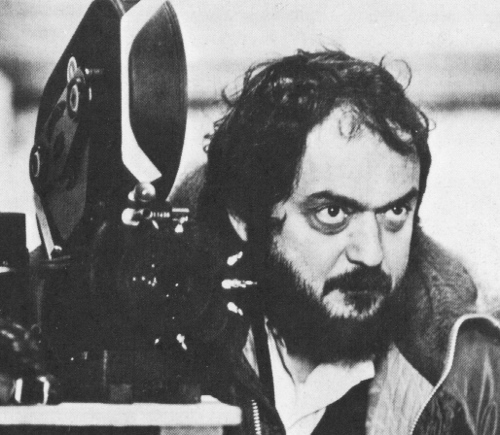
3. Cha Cha Cha (Alfonso Cuarón, Alejandro González Iñárritu, Guillermo del Toro)

A Little Princess, Y tu Mama Tambien, Children of Men (Cuaron). I remember falling in love with A Little Princess at the age of 6, and about a year ago, I bought the movie on DVD. Guess what? I love it as much as I did fifteen years ago. And Y tu? One of the best coming-of-age films that I've ever seen. Oh, and for HP fans out there, Cuaron directed Prisoner of Azkaban.
Amores Perros, 21 Grams, Babel (Gonzalez Inarritu). These three films are known as the "Death Trilogy," as characters who are strangers to each other are connected in some way by death, a car crash for the first two and a gun for the third. All three are amazing; the characters for the films are given great multi-dimensional depth, and I am always left with a sense of awe after watching them.
Hellboy, Pan's Labyrinth (del Toro). Although I will admit that I've never seen Hellboy, I was impressed to the gills with Pan's Labyrinth. The fact that it did not win the Oscar for Best Foreign Language Film absolutely astounds me. I am a firm believer that Mexico has a top spot in quality filmmaking, and these three gentlemen absolutely take the cake for me.
2. Quentin Tarantino
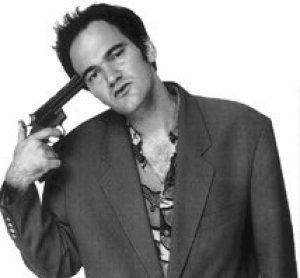
Say what you will about Tarantino using the same bag of tricks. That bag of tricks WORKS. I recently had a discussion with someone who said that they don't care for the quality of dialogue in movies, but to me, dialogue is one of the most important aspects of a film. And let me tell you, you cannot get better dialogue than Tarantino. With films such as Reservoir Dogs, Pulp Fiction, Kill Bill, and Inglourious Basterds, Tarantino always delivers bloody violence with wonderful flair and entertainment. Tarantino also has a pool of actors that he enjoys casting, such as Uma Thurman, Samuel L. Jackson, and Harvey Keitel.
Take a look at this classic scene from Pulp Fiction. Samuel L. Jackson plays perhaps my favorite character of any movie ever: Jules Winnfield. Be advised: this does contain violence.
1. The Coen Brothers

Monday, April 12, 2010
Books, Books, Books
You know, I'm really liking the format of this Top 5 thing that I've been doing for the last couple of posts, so it's going to continue in this manner. Let's see..I've touched on movies, music, and websites, so I think it's time to travel to the genre of literature. As an English major, I spend the majority of my life reading, and I'm pretty sure that without some sort of book, I would probably go into DT's. Now sometimes these books that I am required to read are not the most enjoyable things I've ever had to do (read: Dostoevsky); sometimes I've felt like ramming my head into something either sharp or rock hard getting through the numerous pages of a book. And why does it seem like unenjoyable books have to ramble on for 1200 pages? Okay, maybe I exaggerate, but you know what I mean.
To digress on the subject of excruciating literature, I am going to present my 5 favorite books of all time. Now, I am not part of the literary canon, but dammit, I know what I like, and I cannot recommend these highly enough.
5. The Awakening - Kate Chopin

I remember reading this in high school and absolutely LOATHING it. Sure, it was supposed to be a prime example of feminist literature, but I frankly had no interest whatsoever in the Victorian setting with these seemingly one-dimensional characters. Oh, how wrong I was. I reread the book about four years later in college in one of my favorite professor's classes, and I was ashamed of myself for ever having hated the book. For those who are unfamiliar, The Awakening is the story of Edna Pontellier, a twenty-eight year old mother of two who vacations with her husband for the summer at a community located near the Gulf of Mexico. Sounds like a typical housewife story, right? Wrong. Edna, like most women of the Victorian Era, has an unspoken duty to be the picture of a perfect wife and mother, neglecting her own needs and wants. Too bad this doesn't set well with her, so she decides to clean house a bit (no pun intended). She meets a man by the name of Robert Lebrun, and gasp, she falls in love with a man who is not her husband. She also has another affair and actually moves out of her house. You're probably thinking that this woman is a completely floozy, but let me assure you, she is not. It is the oppression of her own will that forces her to take "drastic" measures, for Edna is a true pioneer, fighting for her own happiness rather than being subjected to the "mother women." The ending of the book astounds me; probably one of my favorite endings of any book. Check it out! It's really a short read, and it's worth your time.
4. A Wrinkle in Time - Madeleine L'Engle

I've probably read this book about 7 or 8 times in my life, and I own the entire Wrinkle in Time series. I'm usually not a science fiction fan at all, but something about this really pulled me in. The protagonist is a girl named Meg Murry, whose parents are scientific geniuses working on a tesseract theory, which allows time travel by folding space and time. A social outcast, Meg has never had anything extraordinary happen to her; she is overshadowed by her athletic, yet average twin brothers, Sandy and Dennys. Her youngest brother, Charles Wallace, is a prodigy, yet considered unintelligent because he does not talk. In the course of the tesseract experiment, Meg's father goes missing, and with the help of three otherworldly ladies named Mrs. Whatsit, Mrs.Who, and Mrs. Which and a slew of other fantastic creatures, Meg, Charles Wallace, and friend Calvin O'Keefe travel the depths of time and space to recover Mr. Murry in an adventure that will stay with the reader even after the book is over.
3. The Poisonwood Bible - Barbara Kingsolver
 I'd always heard a lot of acclaim for this book, but it was just one of those books that I planned to read "some day." Two summers ago, I figured that I'd give it a go, and it absolutely floored me. The book tells the story of four sisters: Rachel, the eldest and most spoiled of the sisters; Leah, the independent, headstrong twin to Adah, who is obsessed with making her father happy; Adah, a hemiplegic, who soars at science and math; and young Ruth May, who is the most playful of the bunch. Forced to live in the Congo as missionaries by their overruling father, this book offers sections from each girl's point of view about the events that transpire. We see political turmoil, religious persecution, patriarchal dominance, and utter tragedy as the missionary life plays out for the girls. This book provides some of the richest character development that I've ever seen in my life and describes ravaged Africa with such brilliance that I felt as if I was living through the scenes of the book.
2. One Hundred Years of Solitude - Gabriel Garcia Marquez
 Let me just inform you now that Gabriel Garcia Marquez is my favorite writer of ALL TIME. If you haven't read his work, you need to get your head out of a hole and go pick this book up today. I'm serious. It's that good. Garcia Marquez has a very unique style of writing, in which he almost always surrounds his stories with magical realism. If you're not aware of what magical realism is, let me explain. Imagine you're reading a story about a normal day in the life of a character. The character is brushing his teeth, taking the garbage out, while his faithful winged dog follows him outside. Magical realism incorporates the fantastic into a story not to highlight the fantasy, but to present it as truth, as if nothing is strange about the winged dog. In One Hundred Years of Solitude, Garcia Marquex focuses on seven generations of a family in a mystical village called Macondo. Throughout the book, the reader will see Macondo frequented by gypsies, war, and love spells. The novel is one that comes full circle, and you'll have to read to find out how it ends.
1. Harry Potter (1-7) - J.K. Rowling
 I apologize if you were looking for something a bit more literary at the top of this list, but I cannot lie. I might love Harry Potter as much as I love my family. I know it seems a bit cliche to have Harry Potter at the top of the list, but let me tell you, folks: it is as good as it's rumored to be. We all know the story behind these famed books, whether by reading or watching the movies. The books pulled me in so much that (and I'm not kidding when I say this), I CRIED my eyes out when it ended. I'm not talking a couple of tears; I was bawling. I mean, the book has magic, Quidditch, and Bernie Bott's Every Flavor Beans. What more could you ask for out of a series?
To digress on the subject of excruciating literature, I am going to present my 5 favorite books of all time. Now, I am not part of the literary canon, but dammit, I know what I like, and I cannot recommend these highly enough.
5. The Awakening - Kate Chopin

I remember reading this in high school and absolutely LOATHING it. Sure, it was supposed to be a prime example of feminist literature, but I frankly had no interest whatsoever in the Victorian setting with these seemingly one-dimensional characters. Oh, how wrong I was. I reread the book about four years later in college in one of my favorite professor's classes, and I was ashamed of myself for ever having hated the book. For those who are unfamiliar, The Awakening is the story of Edna Pontellier, a twenty-eight year old mother of two who vacations with her husband for the summer at a community located near the Gulf of Mexico. Sounds like a typical housewife story, right? Wrong. Edna, like most women of the Victorian Era, has an unspoken duty to be the picture of a perfect wife and mother, neglecting her own needs and wants. Too bad this doesn't set well with her, so she decides to clean house a bit (no pun intended). She meets a man by the name of Robert Lebrun, and gasp, she falls in love with a man who is not her husband. She also has another affair and actually moves out of her house. You're probably thinking that this woman is a completely floozy, but let me assure you, she is not. It is the oppression of her own will that forces her to take "drastic" measures, for Edna is a true pioneer, fighting for her own happiness rather than being subjected to the "mother women." The ending of the book astounds me; probably one of my favorite endings of any book. Check it out! It's really a short read, and it's worth your time.
4. A Wrinkle in Time - Madeleine L'Engle

I've probably read this book about 7 or 8 times in my life, and I own the entire Wrinkle in Time series. I'm usually not a science fiction fan at all, but something about this really pulled me in. The protagonist is a girl named Meg Murry, whose parents are scientific geniuses working on a tesseract theory, which allows time travel by folding space and time. A social outcast, Meg has never had anything extraordinary happen to her; she is overshadowed by her athletic, yet average twin brothers, Sandy and Dennys. Her youngest brother, Charles Wallace, is a prodigy, yet considered unintelligent because he does not talk. In the course of the tesseract experiment, Meg's father goes missing, and with the help of three otherworldly ladies named Mrs. Whatsit, Mrs.Who, and Mrs. Which and a slew of other fantastic creatures, Meg, Charles Wallace, and friend Calvin O'Keefe travel the depths of time and space to recover Mr. Murry in an adventure that will stay with the reader even after the book is over.
3. The Poisonwood Bible - Barbara Kingsolver

2. One Hundred Years of Solitude - Gabriel Garcia Marquez

1. Harry Potter (1-7) - J.K. Rowling

Subscribe to:
Posts (Atom)